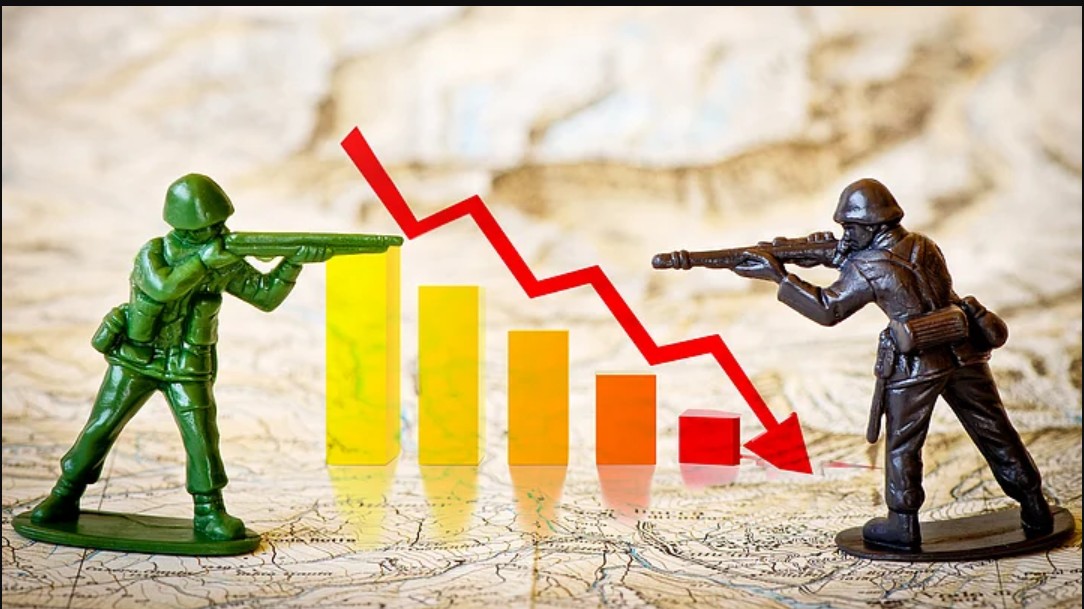
War Impact on IT Industry: Global Conflicts Trigger Uncertainty, Layoffs, and Digital Transformation Shift
The global Information Technology (IT) industry is increasingly feeling the impact of war and geopolitical tensions, creating a ripple effect across businesses, employment, and technological innovation. While wars are traditionally associated with physical destruction and economic instability, their indirect consequences on the digital economy are becoming more evident than ever before.
One of the most immediate effects of war on the IT industry is the slowdown in business investments. During times of conflict, companies tend to adopt a cautious approach, cutting down on non-essential expenditures. Large-scale IT projects, digital transformation initiatives, and software upgrades are often delayed or canceled altogether. This reduction in demand directly impacts IT service providers and software companies, leading to a decline in revenue growth.
Another major consequence is the rise in layoffs and hiring freezes. As organizations struggle to manage costs amid economic uncertainty, workforce reduction becomes a common strategy. Many IT firms have already slowed their hiring processes, while some have resorted to layoffs to maintain profitability. This has created job insecurity among employees and made it more challenging for fresh graduates to enter the industry.
Cybersecurity has emerged as a critical concern in times of war. Modern conflicts are no longer limited to physical battlefields; they extend into cyberspace as well. Governments and organizations are increasingly targeted by cyberattacks, including data breaches, ransomware, and espionage activities. As a result, companies are being forced to invest heavily in cybersecurity infrastructure, leading to a surge in demand for skilled professionals in this domain. While this creates opportunities, it also highlights the growing vulnerability of digital systems.
Supply chain disruption is another significant challenge affecting the IT sector. Wars can interrupt the production and transportation of essential components such as semiconductors, servers, and networking equipment. These disruptions lead to delays in hardware availability and increased costs, impacting everything from data centers to consumer electronics. Companies are now being pushed to rethink their supply chain strategies and reduce dependency on specific regions.
The outsourcing model, which has been a backbone of the global IT industry, is also under pressure. Countries like India, known for providing IT services to international clients, are experiencing reduced project inflows. Geopolitical tensions often lead to stricter data protection laws and reduced cross-border collaboration. Businesses are becoming more cautious about where they store and process their data, which in turn affects outsourcing opportunities.
Economic instability caused by war further complicates the situation. Inflation, currency fluctuations, and reduced global trade contribute to tighter IT budgets. Companies are prioritizing essential operations over innovation, which slows down technological advancements. This shift in focus can hinder long-term growth and competitiveness in the industry.
Despite these challenges, the situation is not entirely negative. The changing landscape is also driving innovation and adaptation. Emerging technologies such as artificial intelligence, cloud computing, and cybersecurity are gaining prominence. Organizations are investing in reskilling their workforce to meet new demands, and professionals who adapt to these changes are likely to find new opportunities.
In conclusion, the effects of war on the IT industry are multifaceted, influencing everything from employment and investment to innovation and global collaboration. While the current scenario presents significant challenges, it also marks a period of transformation. The ability of companies and professionals to adapt to this evolving environment will determine the future trajectory of the IT sector.