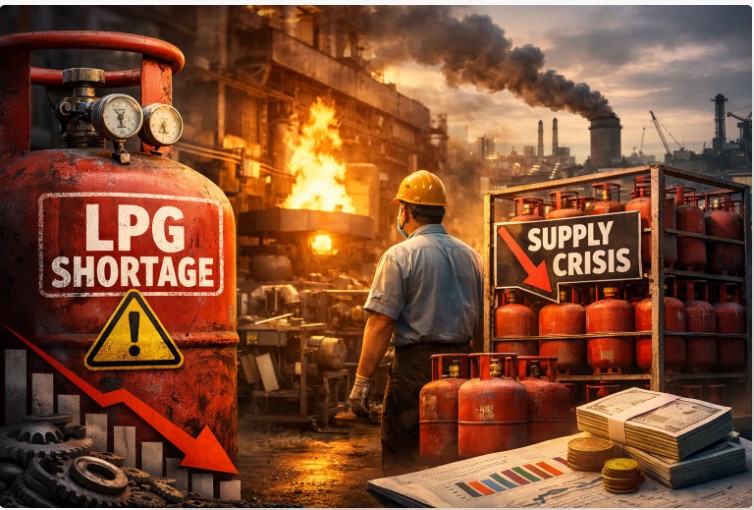
LPG Shortage Raises Concerns for Industries, May Impact Production and Costs
India may be heading toward a potential LPG (Liquefied Petroleum Gas) supply crunch, and its ripple effects could significantly impact the industrial sector. As demand for LPG continues to rise—both for domestic consumption and industrial use—any disruption in supply could create serious challenges for manufacturers and businesses.
LPG plays a crucial role in various industries, including food processing, ceramics, chemicals, and small-scale manufacturing. Many of these sectors rely heavily on LPG as a primary fuel source due to its efficiency, cleaner combustion, and ease of availability. However, if supply fails to keep pace with growing demand, industries may face operational slowdowns and increased expenses.
According to industry experts, small and medium enterprises (MSMEs) are likely to be the most affected. Unlike large corporations, MSMEs often lack the financial capacity to switch to alternative energy sources or invest in backup fuel systems. As a result, they may be forced to either reduce production or absorb higher fuel costs, which could impact their profitability.
One of the major reasons behind the potential shortage is India’s dependence on LPG imports. A significant portion of the country’s LPG supply comes from international markets, making it vulnerable to global price fluctuations, geopolitical tensions, and supply chain disruptions. Any instability in crude oil markets or shipping routes can directly affect LPG availability in the country.
In addition, logistical challenges such as transportation delays, storage limitations, and uneven distribution across regions can further complicate the situation. Rural and semi-urban industrial clusters, in particular, may face greater difficulty in securing timely LPG supplies.
If the shortage persists over a longer period, the manufacturing sector could witness a slowdown in production. Export-oriented businesses may struggle to meet delivery deadlines, potentially affecting India’s trade commitments and global competitiveness. Increased production costs could also lead to higher prices for end consumers, contributing to inflationary pressures in the economy.
To mitigate these risks, experts suggest that industries should begin exploring alternative energy sources such as natural gas, electricity, or renewable options where feasible. At the same time, policymakers may need to step in by ensuring better supply chain management, increasing domestic production, and maintaining strategic reserves of LPG.
In conclusion, while the LPG shortage may not yet be critical, early warning signs indicate that proactive measures are necessary. A balanced approach involving government support and industry adaptation will be key to minimizing the long-term impact on India’s industrial growth.