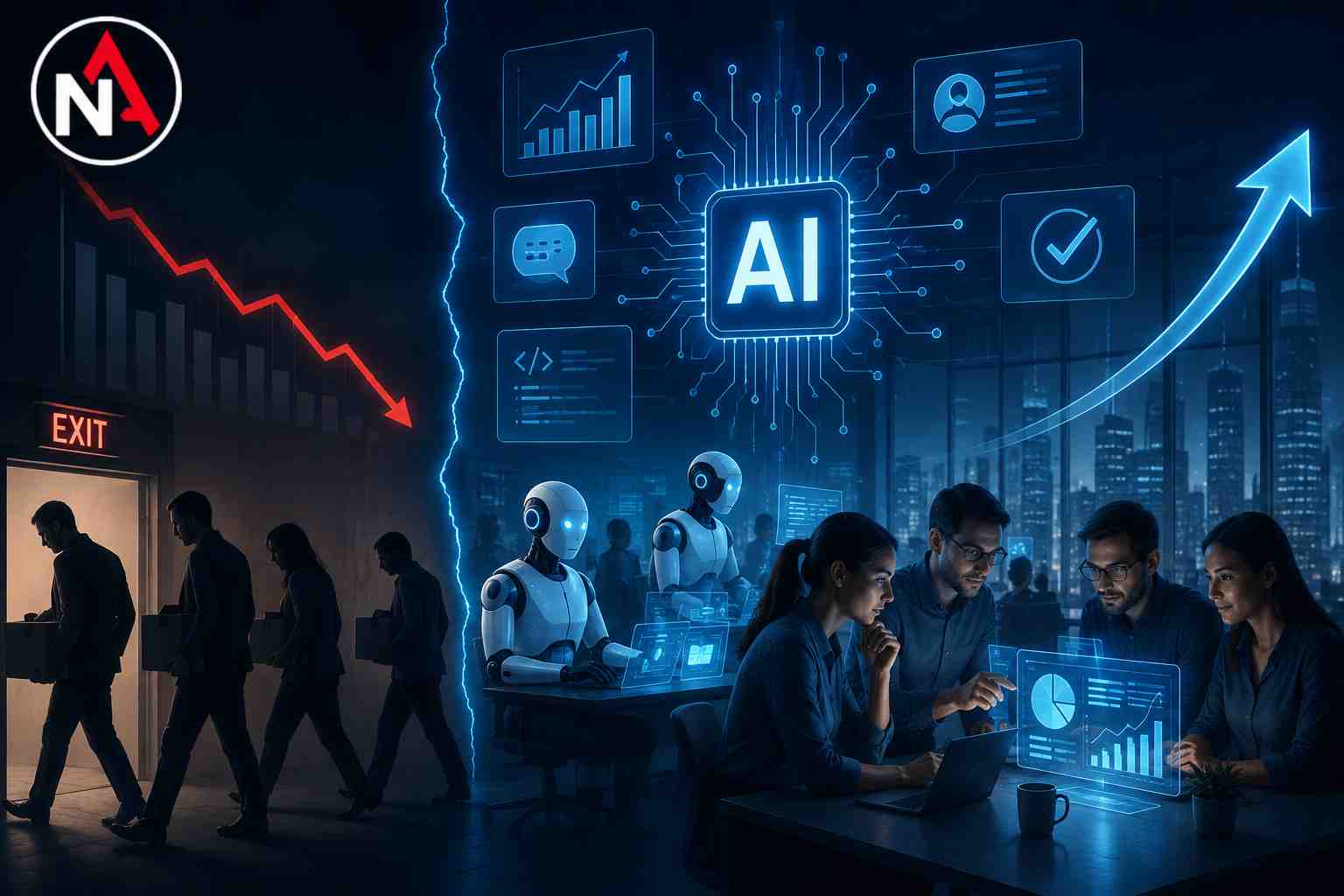
AI-Driven Layoffs Are Reshaping the Workplace as Startups Chase ‘100x Productivity’
The future of work is rapidly changing as companies increasingly turn to artificial intelligence to boost productivity, reduce operational dependency on large teams, and redesign how employees work. A growing number of tech startups are now restructuring their workforce around AI-powered systems, signaling what many believe could become a defining shift in the modern workplace.
One major collaboration software startup recently made headlines after cutting nearly a quarter of its workforce while simultaneously announcing ambitious plans to build an “AI-first organization.” Rather than describing the layoffs as financial cost-cutting, leadership framed the move as a strategic transformation designed to unlock massive productivity gains through artificial intelligence.
The company has reportedly deployed thousands of internal AI agents capable of handling complex operational tasks across departments. Employees are now expected to supervise, guide, and verify the work generated by these systems instead of performing every task manually. According to executives, this model allows workers to focus more on decision-making, creativity, and strategic execution while AI handles repetitive or time-consuming processes.
The restructuring reflects a broader trend spreading across the tech industry. Businesses worldwide are experimenting with autonomous AI systems that can write code, generate reports, automate customer interactions, manage workflows, and even assist in product development. Industry analysts say many organizations now believe smaller teams equipped with advanced AI tools can produce results previously requiring significantly larger workforces.
At the same time, companies are introducing new performance standards centered around AI adoption. Instead of tracking hours worked or traditional productivity metrics, some firms are reportedly measuring how effectively employees use AI systems to save time and generate value. Workers who successfully integrate automation into their roles are increasingly being viewed as high-impact contributors.
This shift is also changing compensation structures. Some AI-focused organizations are considering premium salary models for employees who can leverage artificial intelligence at an exceptional level, with certain executives suggesting that top performers could eventually earn salaries far beyond conventional corporate pay bands.
However, the transition raises serious concerns about long-term job security. Critics argue that while AI may improve efficiency, widespread automation could reduce the need for human workers across multiple industries. Experts also warn that many companies are adopting AI-driven downsizing strategies before proving whether the technology can consistently deliver sustainable financial returns.
Still, supporters of AI transformation believe the workplace evolution is unavoidable. They argue that employees who learn to collaborate with intelligent systems will remain valuable in the new economy, while traditional roles that resist automation may gradually disappear.
As artificial intelligence continues advancing at unprecedented speed, businesses across the world are now facing a defining question: will AI become a tool that empowers workers — or a force that permanently reshapes the global job market?