Pope Leo XIV Issues Historic AI Warning, Calls for Ethical Limits on Technology and Warfare
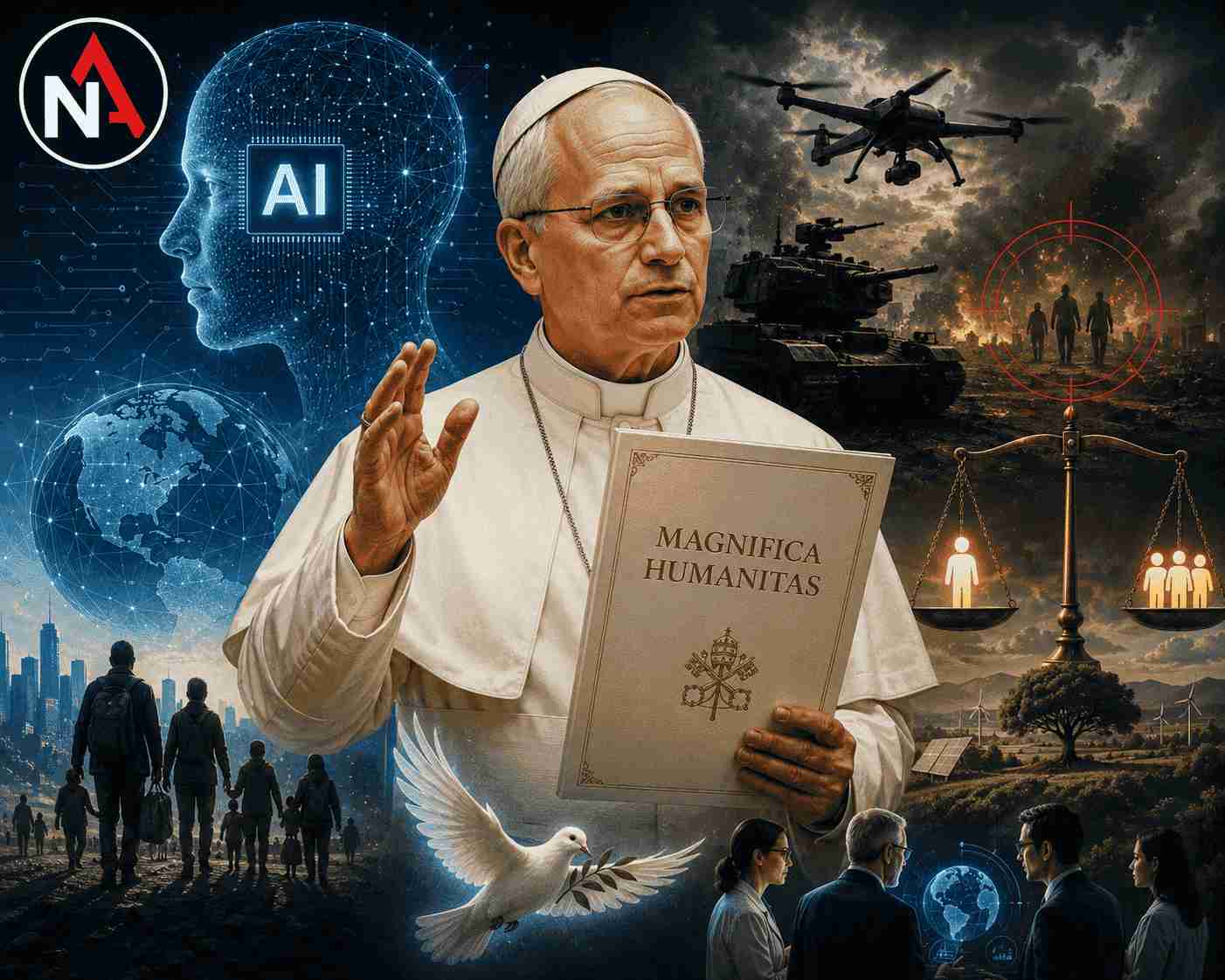
Pope Leo XIV has delivered one of the strongest global warnings yet about the dangers of artificial intelligence, releasing a major theological document focused on ethics, warfare, human dignity, and the future of technology. The encyclical, titled Magnifica Humanitas (“Magnificent Humanity”), is considered a defining moment of his papacy and a historic intervention in the worldwide debate surrounding AI development.
In the document, the pope argues that artificial intelligence must never be controlled by only a handful of corporations, governments, or powerful institutions. He stressed that technology should serve humanity rather than dominate it, warning that unchecked AI systems could deepen inequality, fuel conflicts, and weaken human values.
A major section of the text focuses on the growing role of AI in modern warfare. Pope Leo XIV said the use of advanced technology in military operations should face the “strictest ethical constraints.” He also challenged the traditional “just war” theory, describing it as outdated in today’s world of autonomous weapons, cyber warfare, and AI-powered military systems. According to the pope, military force should only be used for genuine self-defense and never as a tool for political or ideological dominance.
The pontiff emphasized that the future of humanity cannot be shaped solely by algorithms, profit, or technological competition. Instead, he called for stronger legal frameworks, independent oversight, informed public participation, and ethical responsibility from political leaders and technology companies. He warned that AI is not morally neutral because every system reflects the priorities, biases, and objectives of those who create it.
Drawing inspiration from the biblical “Tower of Babel” story, Pope Leo XIV compared modern AI ambitions to humanity’s attempt to centralize power and control. He warned that society risks creating systems that dehumanize people and erase cultural diversity if technology is developed without moral guidance and social responsibility.
The encyclical also criticizes transhumanism and posthumanism — ideologies that seek to merge humans and machines or overcome natural biological limitations through technology. The pope argued that human dignity, emotions, spirituality, and moral consciousness must remain central in an increasingly digital world.
Beyond AI, the document addresses broader humanitarian concerns including migration, social justice, environmental protection, and global peace. Pope Leo XIV stated that the treatment of migrants and refugees remains one of the clearest tests of a society’s moral values. He also acknowledged historical failures of religious institutions regarding slavery and injustice.
The release of Magnifica Humanitas signals the Vatican’s growing involvement in global technology policy discussions. By directly engaging with AI researchers, ethicists, and technology leaders, Pope Leo XIV aims to ensure that future innovations prioritize humanity over power, profit, and conflict.
As artificial intelligence continues transforming economies, governments, and daily life, the pope’s message arrives at a critical moment — urging the world to build technology that protects human dignity, promotes peace, and serves the common good rather than creating division or perpetual conflict.