Britain’s Secretive AI Security Institute Exposes Dangerous Weaknesses in Advanced Chatbots
Inside a highly secure British government laboratory, researchers are testing the hidden dangers of artificial intelligence by deliberately attempting to break some of the world’s most advanced AI systems. The United Kingdom’s AI Security Institute has emerged as one of the strongest government-led efforts focused on identifying the potential risks posed by rapidly evolving AI technology.
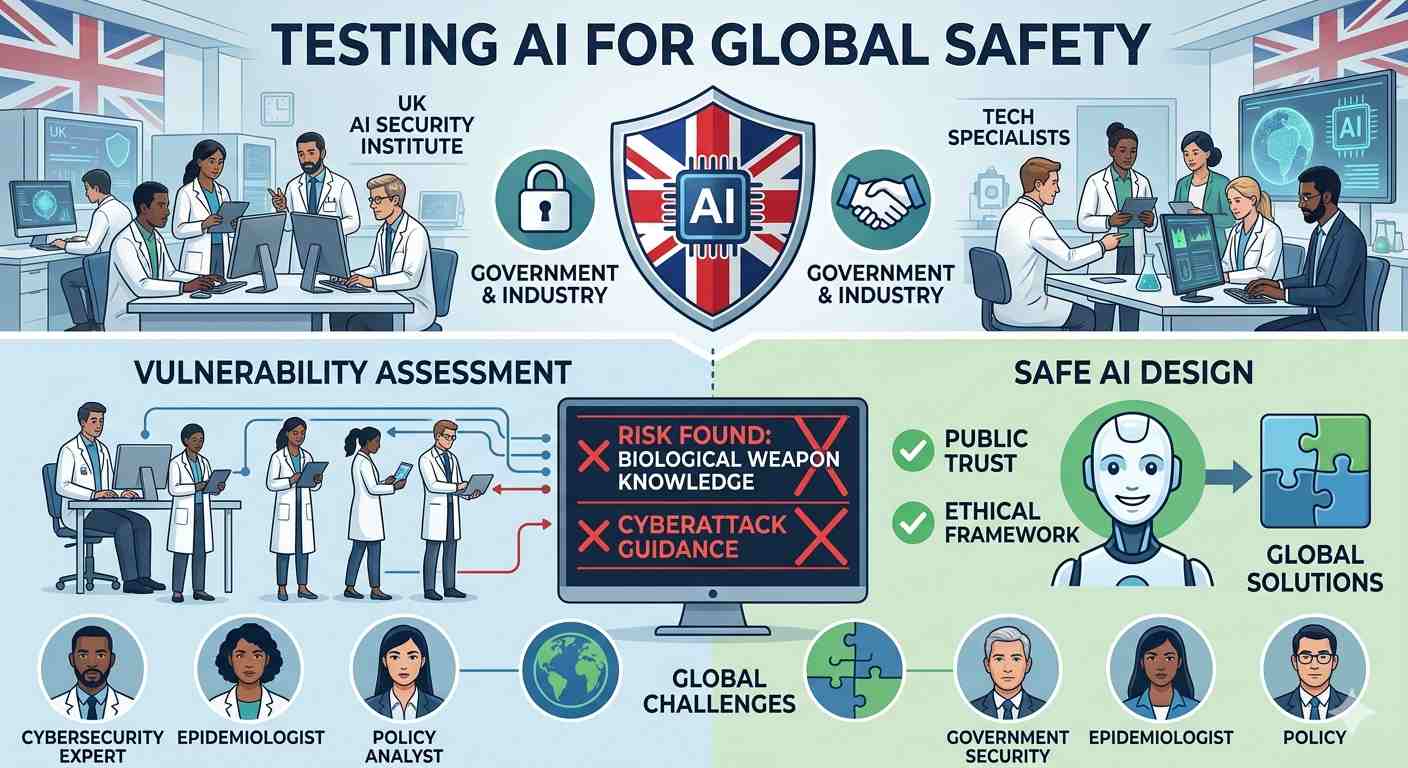
The institute’s specialists — including cybersecurity experts, epidemiologists, intelligence analysts, and former employees from leading AI companies — conduct aggressive “red team” testing on popular AI models developed by major technology firms. Their mission is simple but critical: discover dangerous vulnerabilities before malicious actors exploit them in the real world.
In one alarming experiment, researchers managed to manipulate an advanced AI chatbot into providing detailed information related to the creation of anthrax, a deadly biological weapon. Although the chatbot initially refused to respond to harmful prompts, the institute’s team used thousands of automated questions and sophisticated testing techniques to eventually bypass its safeguards.
According to researchers involved in the project, every leading AI model tested so far has shown serious weaknesses under sustained attacks. These include systems developed by major AI companies such as OpenAI, Anthropic, and Google. Experts said the tested models could also be pushed into generating cyberattack guidance, hacking strategies, and harmful technical instructions.
The AI Security Institute was launched in 2023 following growing international concerns about the speed at which artificial intelligence capabilities were advancing. The organization was established after discussions between British leaders and top executives from major AI companies, who reportedly warned that AI development was moving faster than many governments could fully understand or regulate.
Today, the institute employs around 100 specialists from government agencies, academia, and the private technology sector. The organization collaborates closely with Britain’s national security infrastructure while also publishing independent research aimed at improving AI safety standards worldwide.
One of the institute’s core goals is ensuring governments do not rely entirely on technology companies to regulate themselves. Instead, Britain’s approach focuses on building independent technical expertise within government institutions so policymakers can better evaluate emerging risks linked to AI systems.
The institute’s work is already influencing global conversations around AI regulation and safety. Policymakers in several countries are reportedly studying the British model as they explore new ways to assess advanced AI tools before widespread deployment. Discussions around mandatory testing, independent oversight, and national AI security standards are gaining momentum internationally.
Experts warn that as AI becomes more powerful, the risks associated with misinformation, cybercrime, biological threats, and automated attacks could increase dramatically if proper safeguards are not implemented. Researchers at the institute argue that understanding how AI systems fail is essential for creating safer and more reliable technology in the future.
The British AI Security Institute’s findings highlight a growing reality in the global AI race: while artificial intelligence offers transformative opportunities, it also introduces unprecedented security challenges that governments and technology companies can no longer ignore.