- Nisha
- May 23, 2026
Big Tech Influence Reportedly Helped Halt Trump’s AI Executive Order
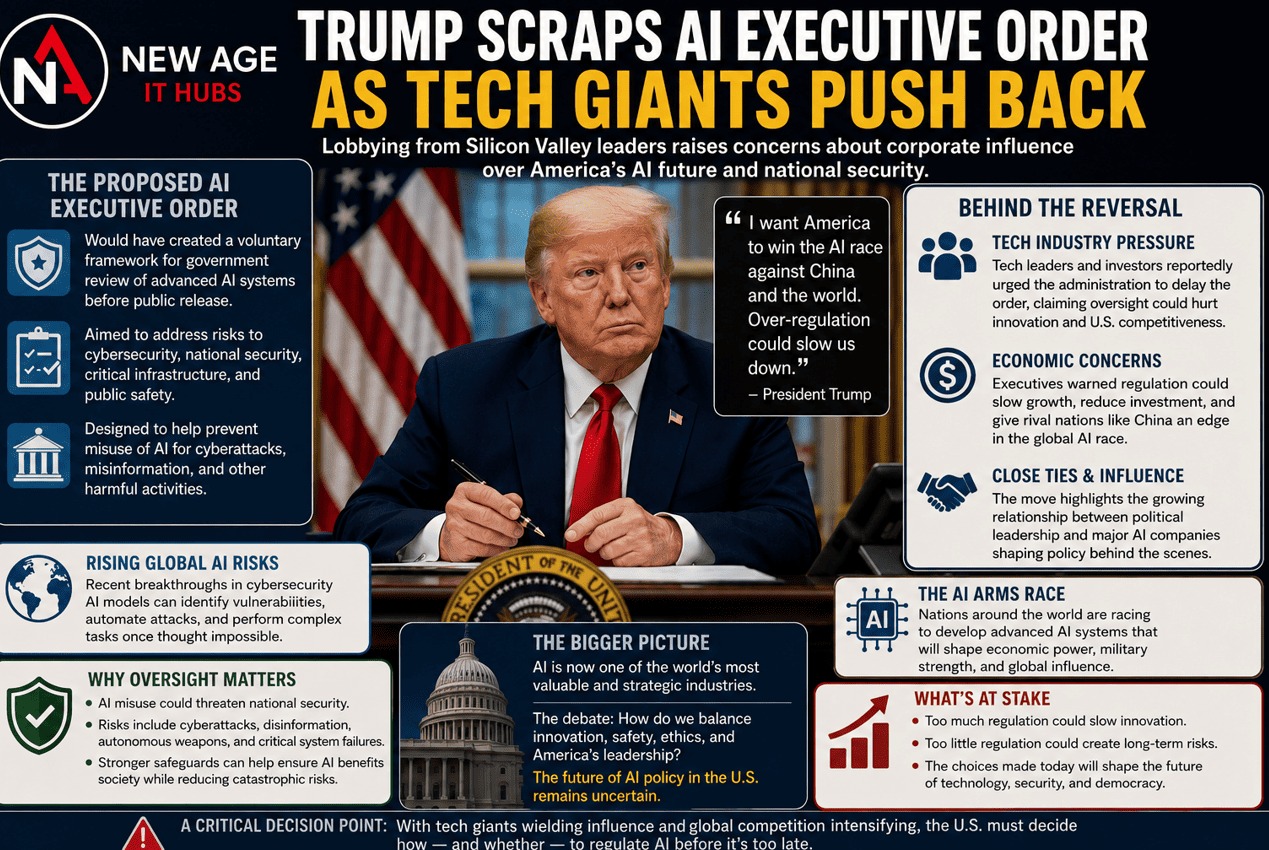
President Donald Trump’s decision to cancel the signing of a proposed artificial intelligence executive order has sparked fresh debate about the growing influence of major technology companies over U.S. AI policy. The executive order would have introduced a government review process for advanced AI systems before public release, but the proposal was abruptly delayed only hours before the scheduled White House event.
According to multiple reports, influential technology leaders and investors privately urged the administration to reconsider the order, arguing that increased oversight could damage America’s position in the global AI race. The decision reflects the ongoing struggle between rapid technological innovation and growing concerns surrounding AI safety, cybersecurity, and national security risks.
The proposed executive order was reportedly designed to create a voluntary framework allowing government agencies to review advanced frontier AI models before deployment. Officials were particularly concerned about the risks posed by increasingly powerful AI systems capable of identifying software vulnerabilities, automating cyberattacks, generating misinformation, or affecting critical infrastructure.
Concerns reportedly intensified after recent breakthroughs in cybersecurity-focused AI models demonstrated capabilities that alarmed governments and security experts worldwide. Advanced AI systems are becoming increasingly capable of detecting weaknesses in computer networks and performing tasks that once required highly specialized human expertise. While supporters view these developments as major technological progress, critics fear such systems could eventually be misused by criminals, hostile governments, or autonomous software agents operating without sufficient safeguards.
Despite these concerns, many leaders in the technology industry continue opposing stronger AI regulation. Critics of government oversight argue that excessive rules could slow innovation, discourage investment, and allow rival nations such as China to gain an advantage in artificial intelligence development. Silicon Valley executives have repeatedly emphasized that AI leadership will play a major role in determining future economic power, military capabilities, and global influence.
The delayed executive order reportedly contained limited enforcement powers and focused mainly on voluntary cooperation between technology companies and government agencies. Even so, industry lobbying efforts intensified in the days leading up to the planned signing. Technology executives and investors allegedly warned that additional oversight could negatively impact economic growth and weaken the United States’ competitive edge in the rapidly expanding AI market.
The controversy also highlights the increasingly close relationship between political leadership and major AI companies. Artificial intelligence has become one of the world’s most valuable and strategically important industries, attracting enormous investment from both governments and private corporations. As AI systems become more advanced, debates over regulation, ethics, safety, and corporate influence are likely to grow even more intense.
Many researchers and policy experts continue warning that the absence of clear AI safeguards could create long-term risks. Concerns range from cybersecurity threats and disinformation campaigns to labor disruption, autonomous weapons systems, and the concentration of power among a small number of technology companies controlling advanced AI infrastructure.
At the same time, supporters of a lighter regulatory approach argue that slowing innovation could prevent important breakthroughs in healthcare, science, defense, and economic development. The disagreement reflects a broader global debate about how governments should balance technological progress with public safety and accountability.
Trump’s reversal signals that strong federal AI regulation in the United States may remain politically difficult for the foreseeable future. With major technology companies continuing to invest heavily in AI expansion and political influence, the future of American AI oversight remains uncertain as competition in the global technology race accelerates.