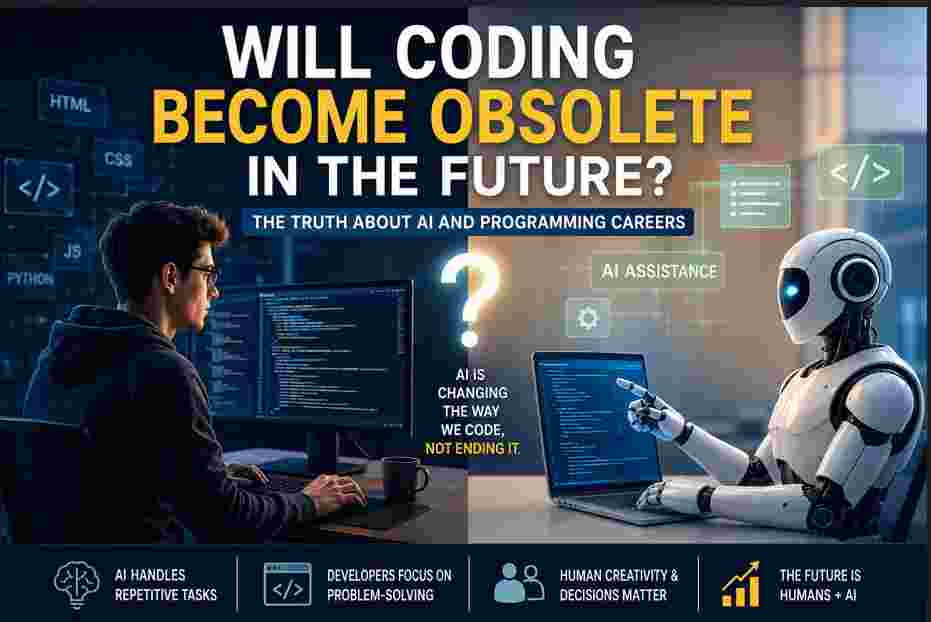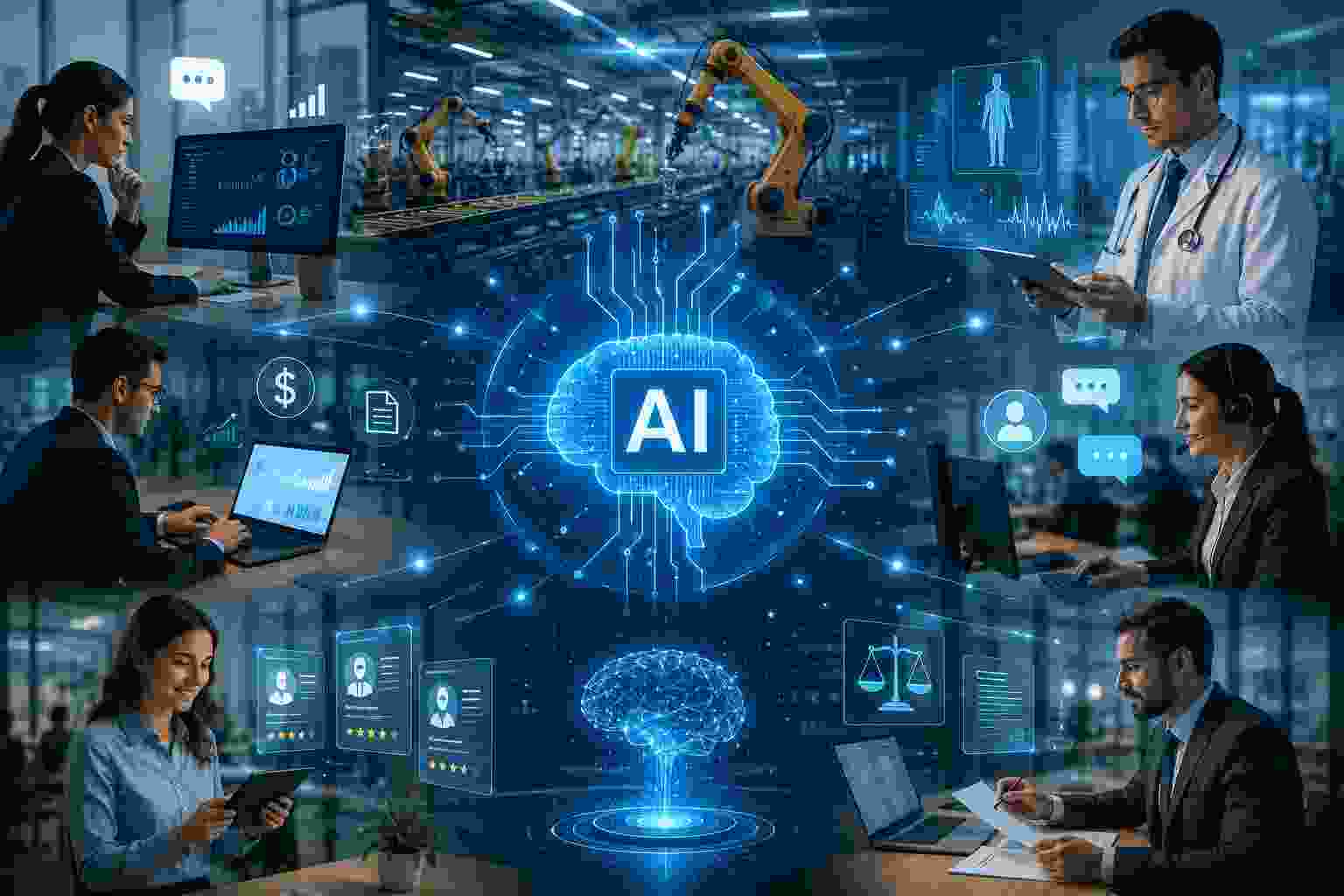
For the past few years, artificial intelligence has been measured by billion-dollar investments, powerful chips, and massive data centers. However, the next chapter of AI will not be defined by hardware—it will be defined by how businesses use AI to solve real problems. Organizations are beginning to integrate AI into daily operations, allowing employees to automate repetitive work, make faster decisions, and focus on higher-value responsibilities.
Artificial intelligence has already changed the technology
industry, but its biggest impact may still be ahead. While headlines often
focus on advanced AI models and expensive computing infrastructure, the real
transformation is happening inside offices, factories, hospitals, financial
institutions, and small businesses.
Companies are no longer asking whether AI works. Instead,
they are exploring where it can save time, improve accuracy, and increase
efficiency. The conversation is gradually shifting from building AI to using AI
in ways that create measurable business value.
From AI Tools to Everyday Business Operations
Initially, most organizations adopted AI for simple tasks
such as writing emails, summarizing documents, generating reports, or assisting
developers with code. These applications improved productivity but only
scratched the surface of what AI can achieve.
Today, businesses are taking a more strategic approach. AI
is becoming part of everyday operations, handling repetitive workflows,
organizing information, supporting customer service, monitoring business
performance, and helping employees complete complex tasks more efficiently.
Instead of replacing workers, AI is increasingly acting as a
reliable digital assistant that helps teams accomplish more in less time.
Why Productivity Matters More Than Infrastructure
The first wave of the AI boom was driven by investments in
graphics processors, cloud platforms, and data centers. These technologies
created the foundation for modern AI systems.
The next stage is different.
Success will no longer depend on who owns the largest
computing infrastructure. It will depend on which organizations can transform
that technology into faster workflows, smarter decisions, and better customer
experiences.
Businesses that integrate AI into their daily operations are
likely to gain a competitive advantage through improved efficiency rather than
simply owning powerful hardware.
AI Is Becoming Part of Every Department
Artificial intelligence is no longer limited to software
development teams.
Finance departments can use AI to review invoices, identify
unusual transactions, and prepare financial reports.
Marketing teams can generate campaign ideas, personalize
customer communication, and analyze performance data within minutes.
Customer support departments can automate routine inquiries
while allowing human representatives to focus on more complex cases.
Human resources teams can simplify recruitment, screen
applications, and organize employee documentation.
Legal professionals can accelerate document analysis while
maintaining final human review before important decisions are made.
Across industries, AI is becoming a practical business tool
rather than an experimental technology.
Small Businesses May Benefit Even More
Large enterprises often require months to introduce new
technologies because of complex systems and multiple approval processes.
Small and medium-sized businesses usually have fewer
technical barriers, making AI adoption much faster.
A local accounting firm, healthcare clinic, manufacturing
company, or digital agency can automate scheduling, invoicing, proposal
creation, customer communication, and reporting without making massive
technology investments.
For many growing businesses, AI provides an opportunity to
increase productivity without significantly increasing operating costs.
Human Expertise Still Matters
One of the biggest misconceptions about artificial
intelligence is that it will replace entire professions.
History suggests something different.
New technologies generally remove repetitive work while
increasing the importance of creativity, experience, communication, and
decision-making.
AI can organize information, identify patterns, and automate
routine tasks, but people remain responsible for strategy, leadership, customer
relationships, ethical decisions, and innovation.
The strongest organizations will combine AI efficiency with
human expertise instead of choosing one over the other.
Responsible AI Adoption Will Define Future Success
As AI becomes deeply integrated into business operations,
governance becomes increasingly important.
Organizations must establish clear policies for security,
privacy, transparency, and human oversight. Employees should understand where
AI can be trusted and where human review remains essential.
Businesses that balance innovation with responsible AI
practices will be better positioned to earn customer trust while reducing
operational risks.
The Next Business Advantage
Artificial intelligence is entering a new phase where its
value is measured by real business outcomes rather than technical capabilities.
Companies that successfully redesign workflows, eliminate
repetitive processes, and empower employees with AI will likely outperform
competitors that treat AI as just another software tool.
The future of AI is not simply about faster computers or
larger models. It is about creating smarter organizations where people and
technology work together to achieve better results.